PhilosophyYes
Philosophy is something we can do together.
Welcome to a growing effort to investigate, cultivate, and connect the many ways philosophy can contribute to human flourishing.Here you can encounter the work, participate in it, and explore the questions driving it. Some of it is already underway; some is still being developed.All of it begins with the possibility that philosophy can become a more living part of ordinary human life.
What's Happening Now
Small philosophical gatherings are taking place in the Dallas–Fort Worth area, including An Evening of Philosophical Discovery: an experience designed to help people discover philosophy as something they can practice for themselves and with others.We are also developing writing, conversations, research, and new forms of philosophical participation.
Join a gathering, express interest in future events, or learn what philosophical participation can look like.
Encounter the questions, working ideas, and research directions animating the work.
Find the podcast, essays, reflections, and other entry points into Chris's public philosophical work.
Learn why The Foundation for Philosophical Stewardship exists, what it is cultivating, and how to participate or collaborate.
Ask a question, receive occasional news about gatherings, writing, podcast episodes, and the development of the Foundation, or just say hello.
Philosophize with others
The gatherings offered here are Foundation initiatives hosted by Chris Welsh. They are places to slow down, notice what matters, ask better questions, and investigate experience with other people. They are not lectures, debates, therapy sessions, or tests of prior knowledge. You do not need to have studied philosophy to participate.What matters is a willingness to pay attention, contribute honestly, listen carefully, and, perhaps, allow a question to become more interesting than the answer you might have brought with you.
The guidance for different events may vary, but the rules are always the same: be kind, be supportive, be curious.Explore the ways you can participate and let us know below what interests you:
An Evening of Philosophical Discovery
Status: Happening nowAn Evening of Philosophical Discovery is a small-group experience designed to help people discover themselves as participants in philosophy.Each evening (or afternoon) begins with a question rooted in human experience. Participants are invited to notice what the question awakens in them, follow emerging interests and uncertainties, and explore what becomes possible through reflection, silence, and conversation.The purpose is not to display philosophical knowledge or arrive at a single correct conclusion. It is to create conditions in which people can genuinely do philosophy—and recognize capacities for inquiry that may already be present in their lives.What to expect
A small group, ordinarily around six people
Approximately two hours together
A carefully prepared environment
A question that can be entered through lived experience
Time to reflect, speak, listen, question, and reconsider
Active stewardship of the conversation so that tentative insights and emerging questions have room to develop
No prior reading or philosophical training is required.
Other ways of gathering
We are also exploring several other forms of philosophical participation. These formats are at different stages of development and are not all regularly available.
Salons
Status: Occasional
Hosted conversations organized around a topic that participants explore together. Salons make room for ideas, experience, questions, stories, disagreements, and unexpected connections without requiring a common answer.Inquiries
Status: In development
Collaborative investigations organized around a question the group genuinely attempts to answer. Participants clarify meanings, examine assumptions, propose and test answers, and revise their thinking as the inquiry develops.Expeditions
Status: In development
Guided encounters with a philosophical text, idea, thinker, practice, cultural object, or field of experience. Expeditions help participants enter unfamiliar philosophical terrain and develop a more usable relationship with what they find there.Philosophy in the Round
Status: In development
A structured practice in which participants take different roles in an inquiry—explorer, guide, and observer—so that the movements and capacities involved in philosophical conversation can be practiced and seen more clearly.Philosophical Companionship
Status: Limited availability
An ongoing one-to-one relationship centered on a participant's philosophical life: the questions, experiences, disorientations, inheritances, and practices that are presently alive for them.
Host or collaborate
Libraries, bookstores, educational programs, community organizations, congregations, dialogue groups, and other local partners can help create places where philosophical life becomes more available.If you are interested in hosting a pilot, collaborating on a gathering, or exploring what might serve your community, we would be glad to talk.
Interested in participating?
Tell us what interests you and how you would like to be involved.
What might happen if we cultivate philosophical life?
How do people recognize their own capacity for philosophy? What conditions help that capacity develop? How can philosophical practice deepen our relationship with ourselves, one another, inherited wisdom, and reality? What forms of community could sustain philosophy as a way of life rather than only a field of knowledge?These questions guide the gatherings, writing, research, and institutional development taking place through Chris's work and The Foundation for Philosophical Stewardship.
philosophical agency
Status: Working framework under development
Philosophical Agency names a person's capacity to participate deliberately in the interpretation and formation of their life.
It includes capacities such as noticing experience, forming questions, examining assumptions, making distinctions, entering other perspectives, engaging philosophical inheritance, remaining with uncertainty, revising understanding, and acting in response to what one discovers.The framework does not assume that everyone must become an academic philosopher. It asks how human beings can become more capable participants in the philosophical dimensions of their own lives.
Philosophy as an art of living
For much of its history, philosophy was not understood only as the production of theories, it was also a practice of formation: a way of learning to perceive, judge, act, relate, and inhabit reality.That inheritance raises a contemporary question: what would it take to make philosophy available again as an art of living—without merely reconstructing an ancient school or reducing philosophy to lifestyle advice?This inquiry informs both the public gatherings and the Foundation's emerging research and educational work.
Current directions of inquiry
Recognizing philosophy in ordinary life
How does philosophical activity already appear in people's questions, decisions, conflicts, relationships, and attempts to understand what is happening to them?Conditions for philosophical participation
What kinds of environments, relationships, practices, and forms of stewardship help people move beyond opinion exchange and participate more fully in inquiry?Philosophy's living inheritance
How can people enter meaningful relationships with texts, traditions, practices, and thinkers without treating inheritance as either untouchable authority or inert historical material?Philosophical community
What forms of gathering and association can support philosophy as a shared, sustained activity across differences in education, background, and worldview?Stewardship and circulation
How can philosophical capacities, practices, and inheritances be cultivated, connected, documented, and passed onward without becoming standardized beyond recognition?
research commons
The ideas presented here are developing through study, writing, gatherings, experiments, and conversation with others. Some have become durable commitments; others remain working hypotheses.This section will grow as the work becomes more precise and as there is more to share. For now, it offers a window into the questions being investigated rather than a complete account of the answers.
If you are interested in discussing these or other ideas, we would be happy to hear from you.
Other ways to explore philosophy
The podcast and writing provide ways to enter the questions behind the gatherings, follow ideas as they develop, and explore philosophy as part of ordinary human life.These are works by Chris Welsh. Where appropriate, they may also be cultivated, supported, or featured by The Foundation for Philosophical Stewardship.
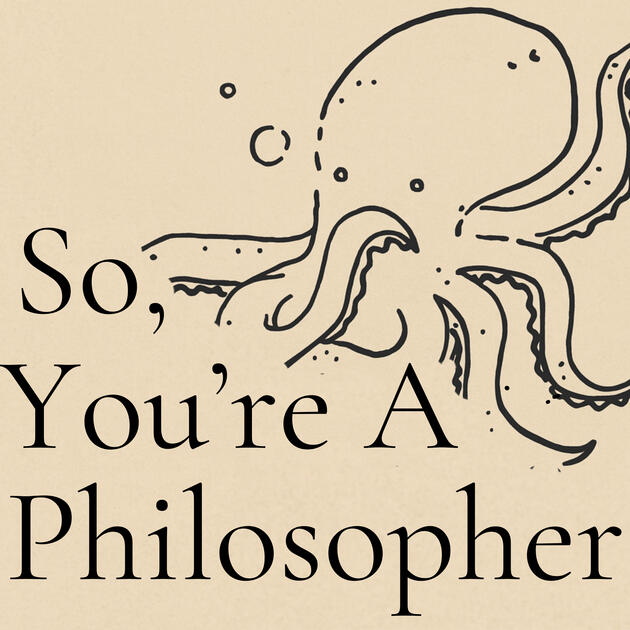
Philosophy as something human beings already do.

Essays and articles and so forths.
The Foundation for Philosophical Stewardship
The Foundation for Philosophical Stewardship is an emerging nonprofit institution dedicated to cultivating the conditions in which people can encounter their lives philosophically, develop their philosophical capacities, and participate more deliberately in the realities they share.Its work includes education, inquiry, research, practice, community formation, collaboration, documentation, and stewardship of philosophy's living inheritance.The Foundation is currently in an early stage of formation. It is beginning with modest public gatherings, exploratory research, relationship-building, documentation, and small collaborations.
Why the Foundation exists
Socrates spoke of the greatest good: examining ourselves and the lives we lead, and that to not do so would make life unlivable.The Foundation takes seriously the question that follows:
How do human beings learn to examine their lives—and how do we build a civilization capable of examining itself?The Foundation does not presume to possess that answer but begins with something more modest: creating places where people can investigate the question together.Human beings possess the capacity for philosophy, but capacity alone does not guarantee that it will be recognized, practiced, or supported.Many of the ways humans engage with philosophy is at some distance: in books, classrooms, commentary, or debate. These can preserve and transmit an extraordinary inheritance, but they do not always help a person recognize philosophy operating within their own life.The Foundation exists to explore and cultivate the environments, practices, and forms of community that make this recognition more possible.Underlying this work is a simple conviction: philosophy is not only something humanity has inherited, it is also a living human activity.
What the Foundation is doing now
At its present stage, the Foundation is:
Hosting and refining small philosophical gatherings
Developing accessible forms of philosophical practice and participation
Building relationships with participants, facilitators, thinkers, community organizations, and potential partners
Investigating how philosophical capacities emerge and how they can be supported
Documenting lessons from practice
Developing writing, media, and orientation materials
Exploring modest collaborations that strengthen an existing philosophical ecology rather than assuming all work must originate within the Foundation
Organizational directions
The Foundation is cultivating several related functions. These are best understood as directions of work rather than fully established divisions.The Conservatory
The participatory and practice-oriented function: gatherings, learning environments, facilitation, apprenticeship, companionship, and forms through which people can develop philosophical capacities together.The Institute
The inquiry, research, and documentation function: investigating philosophical agency, practices, communities, inheritances, and the conditions that help philosophical life flourish.The House
The experiential and place-making horizon: the possibility of environments—temporary, mobile, partnered, and perhaps eventually permanent—in which philosophical life can be practiced with hospitality, seriousness, beauty, and belonging.
An emerging ecology
The Foundation was initiated by Chris Welsh, but it is not intended to become a nonprofit wrapper around one person's projects.Some work will originate within the Foundation while some will remain Chris's independent authorial, media, or philosophical work. Work will be cultivated with the Foundation and also arise through collaborators, participants, or independent people and organizations whose work the Foundation may support, connect, document, or learn from.Clear relationship labels throughout this site identify these distinctions as the work develops.
Ways to become involved
Participate
Attend a gathering, follow the public work, or express interest in future forms of participation.
Collaborate
Attend a gathering, follow the public work, or express interest in future forms of participation.
Contribute
Share experience, make introductions, offer insights, or contribute to the Foundation's developing work.
A few explanations
Here are a few terms and concepts and things that may need more context
What's up with the octopus?
That thoughtful fellow observing on the periphery is Ponderpus, who serves as an unofficial mascot of sorts. Chris has always loved and been fascinated with octopuses, and then read Other Minds: The Octopus, The Sea, and the Deep Origins of Consciousness by Peter Godfrey-Smith and simply had to have a pondering partner when starting his podcast and online philosophical writing.It became a fitting companion for the wider work: intelligent, curious, exploratory, difficult to reduce to a single mode of being, and capable of reaching in several directions (each tentacle seeming to have its own consciousness) without losing its center.It also introduces something the work values deeply: play. Philosophy can be serious without becoming solemn, institutional without becoming sterile, and rigorous without losing its strangeness or delight.
What does 'full value of philosophy' mean?
The many ways philosophy can matter when it is not reduced to only one of its forms: an academic subject, a collection of inherited ideas, a method of argument, or a tool for individual self-improvement.All are valid expressions of philosophy (and we do not presume this is a complete list) - exploring the full value means seeing what happens when a fuller understanding of what philosophy actually encompasses is embraced and applied to human life.Philosophy can help us examine experience, form questions, test interpretations, deepen understanding, exercise agency, encounter inherited wisdom, and participate more deliberately in our lives and shared reality. It can shape not only individuals, but also relationships, practices, communities, and institutions.The phrase does not mean that philosophy provides every answer or guarantees human flourishing. It names a horizon of inquiry: What becomes possible when philosophy is not merely studied or discussed, but practiced, supported, and allowed to participate more fully in human life?
What is philosophical stewardship?
Philosophical stewardship is the practice of caring for the conditions in which philosophy can remain alive.It includes cultivating human capacities for inquiry, creating environments in which people can philosophize together, preserving and renewing relationships with philosophical inheritance, supporting those who undertake philosophical work, and helping discoveries circulate among people and communities.Stewardship does not mean controlling philosophy, determining which questions may be asked, or claiming ownership over a tradition. It means accepting responsibility for something valuable that no one person or institution possesses.The Foundation uses stewardship because its work is not limited to teaching philosophy or producing ideas. It is concerned with the people, practices, relationships, places, resources, and inheritances that allow philosophical life to flourish.
If you came to the FAQ looking for an answer and didn't find it, please reach out and let us know!
About Chris Welsh
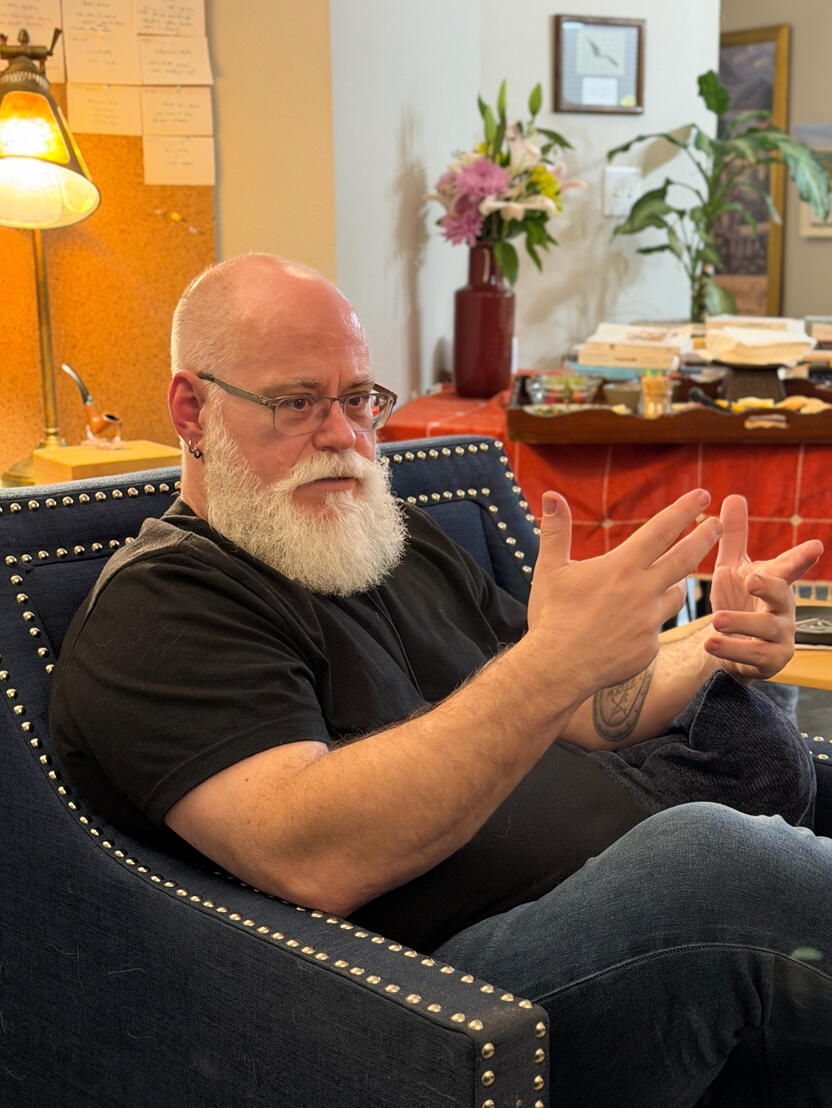
Chris Welsh is a writer, facilitator, and philosophical steward based in Allen, Texas. His work explores how people recognize and cultivate their capacity for philosophy—and how gatherings, relationships, practices, and institutions can help philosophical life flourish.
Chris develops and hosts philosophical gatherings, including An Evening of Philosophical Discovery. He is also developing the Philosophical Agency framework, hosts So, You're a Philosopher, occasionally writes on Substack, and is the founder of The Foundation for Philosophical Stewardship.His approach grows from a conviction that philosophy is not only a body of knowledge or an academic discipline. It is also a living activity through which people can examine experience, deepen understanding, exercise agency, enter relationships with philosophical inheritance, and participate more deliberately in reality.Chris's role is not to supply other people with predetermined answers. It is to help create and steward conditions in which questions can become alive, inquiry can deepen, and people can recognize more of their own philosophical capacities.
What would you like to explore?
Receive information about gatherings, writing, podcast episodes, and other public opportunities.
Discuss collaboration or partnership; perhaps hosting a gathering, working with a community, exploring a research or educational question, offering a venue or resource, or developing a project together.
Write to Chris about the work, a philosophical question, an invitation, or something else.
Your information will be used to respond to your message and, if you choose, to send occasional updates. It will not be sold or shared for marketing.
Thank you!
Chris here: If there is one thing I have discovered on my own philosophical journey it's that as amazing as philosophy is, it's seriously incomplete until others join you on the trip. I'm grateful you've shown interest, and look forward to connecting with you!
Chris or someone working with the Foundation will respond as soon as reasonably possible.Your information will be used to respond to your message and, if you choose, to send occasional updates. It will not be sold or shared for marketing.